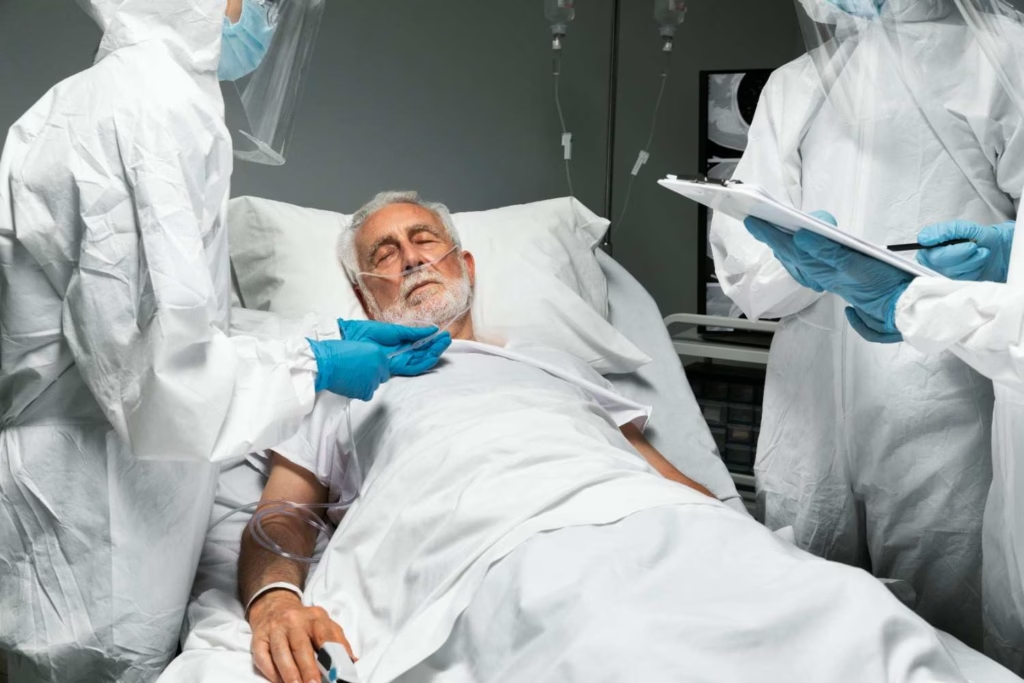
Hospitals save lives, but for older adults, a hospital stay can sometimes create new health problems even while treating the original illness. Families often focus only on why the older person was admitted, such as an infection, fall, heart problem, or weakness, but they may not realize that the hospital environment itself can be risky. Older adults are more vulnerable to confusion, muscle loss, poor sleep, falls, infections, medication side effects, dehydration, and loss of independence during even a short admission.
A younger person may spend a few days in bed and recover quickly, but an older body often changes much faster. Just a few days in hospital can turn an independent older adult into someone who suddenly needs help walking, eating, or using the bathroom. This is why doctors who care for the elderly pay close attention not only to the illness, but also to the hidden dangers that come with the hospital stay itself.
Table of Contents
- Why Hospitals Affect Older Adults Differently
- The Danger of Bed Rest
- Delirium and Sudden Confusion
- Sleep Disruption and Night-Time Stress
- Hospital Falls
- Dehydration and Poor Eating
- Medication Side Effects
- Infections Picked Up in Hospital
- Loss of Confidence After Illness
- Pressure Sores and Skin Damage
- Catheters and Their Hidden Risks
- Why Discharge Can Be Harder Than Families Expect
- How Families Can Reduce Hospital Harm
- When Home Care May Be Safer
- The Goal: Treat Without Causing Decline
- A Word from Dr. Zara
- Frequently Asked Questions
Why Hospitals Affect Older Adults Differently
Older adults respond to hospital stress very differently from younger people. The body has less reserve, which means even a small illness or a short stay can lead to a much bigger decline.
A hospital stay changes many things at once. The person sleeps in a strange room, hears alarms all night, meets unfamiliar staff, eats different food, moves less, and often has medications changed quickly. These changes may seem minor, but for an older adult they can trigger major physical and mental decline.
This is especially true in people with frailty, dementia, Parkinson’s disease, heart failure, or poor mobility.
The danger is often not just the illness that brought them in, but the loss of normal routine and movement.
The Danger of Bed Rest
One of the biggest risks in hospitals is simply staying in bed.
Older muscles weaken very quickly. Sometimes even 24 to 48 hours of bed rest can reduce leg strength enough to make walking much harder.
A person who walked independently before admission may suddenly struggle to stand after several days in bed. This can create a cycle where weakness leads to fear, fear leads to less movement, and less movement causes even more weakness.
Doctors who specialize in older adults try to prevent this by encouraging early movement.
Even simple actions matter:
- Sitting in a chair for meals
- Walking to the bathroom
- Short corridor walks
- Standing during washing
Movement is often just as important as medicine.
Delirium and Sudden Confusion
One of the most serious hospital dangers for older adults is delirium, which is sudden confusion.
A person who was clear-minded at home may suddenly become:
- Disoriented
- Sleepy
- Agitated
- Hallucinating
- Unable to recognize family
- Pulling at drips or tubes
This often happens because the hospital environment overwhelms the aging brain.
Triggers include infection, poor sleep, dehydration, pain, constipation, medication changes, and unfamiliar surroundings.
Delirium is not just temporary confusion. It can lead to falls, longer stays, long-term memory decline, and even increased risk of death.
Sleep Disruption and Night-Time Stress
Hospitals are noisy places, and sleep is often badly disrupted.
There are:
- Night checks
- Vital signs
- Blood tests
- Alarms
- Corridor lights
- Other patients
- Bathroom trips
Older adults are much more sensitive to poor sleep.
A few nights of bad sleep can worsen:
- Confusion
- Mood
- Blood pressure
- Pain
- Memory
- Recovery speed
Families are often surprised how quickly sleep disruption alone can make an older adult seem “not like themselves.”
Hospital Falls
Falls are common in hospitals, especially when older adults try to get up alone in an unfamiliar room.
The risks increase because of:
- Weakness
- IV lines
- Slippery socks
- New medicines
- Urgent bathroom needs
- Poor lighting at night
- Confusion
A hospital fall can lead to fractures, head injuries, fear of walking, and much longer recovery.
This is why mobility support and call-bell use are so important.
Dehydration and Poor Eating
Many older adults eat and drink less in hospitals.
This may happen because of:
- Unfamiliar food
- Poor appetite
- Nausea
- Difficulty opening packets
- Weakness sitting up
- Swallowing issues
- Sleepiness from medication
Even mild dehydration can quickly worsen confusion, kidney function, blood pressure, and falls.
Poor nutrition also leads to faster muscle loss.
This is why food and fluids are a major medical issue during elderly admissions.
Medication Side Effects
Hospital stays often involve rapid medication changes.
New antibiotics, pain medicines, sleeping tablets, blood pressure medicines, or anti-nausea drugs may be added.
Older adults are far more sensitive to side effects.
A medicine that is routine in younger patients may cause:
- Dizziness
- Low blood pressure
- Confusion
- Hallucinations
- Constipation
- Severe sleepiness
Sometimes the treatment causes as much difficulty as the illness.
This is why medication review is so important.
Infections Picked Up in Hospital
Hospitals contain many infections, and older adults are more vulnerable to catching them.
This may include:
- Chest infections
- Urine infections
- Resistant bacteria
- Gastrointestinal infections
- Line infections
Because the immune system is weaker with age, even a hospital-acquired infection can become serious quickly.
Preventing unnecessary devices and encouraging hand hygiene reduces this risk.
Loss of Confidence After Illness
One hidden danger families often miss is loss of confidence.
An older adult may physically recover but emotionally lose trust in their body.
After a fall, delirium episode, or several weak days in bed, they may become afraid to:
- Walk alone
- Use stairs
- Bathe independently
- Leave the house
- Sleep alone
This fear can reduce activity and speed up long-term decline.
Confidence is part of recovery.
Pressure Sores and Skin Damage
Older skin is fragile and more easily damaged.
Lying in bed too long, especially during illness, can lead to pressure sores.
These often develop on:
- Heels
- Hips
- Lower back
- Elbows
Pressure sores are painful and can become infected.
Frequent turning, better hydration, sitting out of bed, and skin checks help prevent them.
Catheters and Their Hidden Risks
Urinary catheters may seem convenient, but in older adults they can create major problems.
They increase the risk of:
- Urine infections
- Agitation
- Delirium
- Reduced walking
- Dependence on bed care
Whenever possible, catheters should be removed early.
The longer they stay, the greater the risk.
Why Discharge Can Be Harder Than Families Expect
Families often expect discharge to happen as soon as the main illness improves.
But older adults may leave hospital with:
- Weaker legs
- New walking aids
- Medication changes
- Less appetite
- Confusion
- Reduced confidence
This means home may no longer be safe without support.
Discharge planning often needs:
- Therapy reviews
- Equipment
- Family meetings
- Home safety checks
- Nursing support
The illness may improve faster than the person’s function.
How Families Can Reduce Hospital Harm
Families can make a major difference during admission.
Helpful things include:
- Encouraging walking when safe
- Bringing glasses and hearing aids
- Helping with meals
- Reassuring orientation
- Keeping day-night routine clear
- Reporting sudden confusion early
- Asking about catheter removal
- Checking medication changes
These small actions often prevent major decline.
When Home Care May Be Safer
Not every illness requires long hospital care.
For some frail older adults, home-based treatment with:
- Community nurses
- Oral antibiotics
- Family support
- Physiotherapy
- Palliative care
may sometimes be safer than prolonged admission.
The decision depends on severity, support, and safety.
The Goal: Treat Without Causing Decline
The best elderly hospital care aims to treat the illness without causing functional decline.
The real success is not only discharge alive, but discharge:
- Walking safely
- Thinking clearly
- Eating well
- Sleeping better
- Feeling confident
- Returning close to baseline
This is what good geriatric medicine tries to protect.
A Word from Dr. Zara
Older adults can lose strength, clarity, appetite, sleep, and confidence very quickly in unfamiliar environments, even while the original condition improves. Good hospital care for older people must always balance treatment with protection from preventable decline. Early movement, sleep protection, careful medication review, hydration, and family involvement are often just as important as antibiotics or scans. In many cases, the difference between returning home independent or needing long-term care comes from how well we prevent hospital-related harm. If you have any medical questions, feel free to email me at DRZARAMULLA@gmail.com.
Frequently Asked Questions
1. Can a short hospital stay weaken older adults?
Yes, even a few days can cause major weakness.
2. Why does confusion happen suddenly?
Often because of delirium triggers.
3. Is bed rest harmful?
Very harmful in frail older adults.
4. Can families reduce hospital risks?
Yes, greatly.
5. Why is discharge sometimes slow?
Because safety at home must be checked.