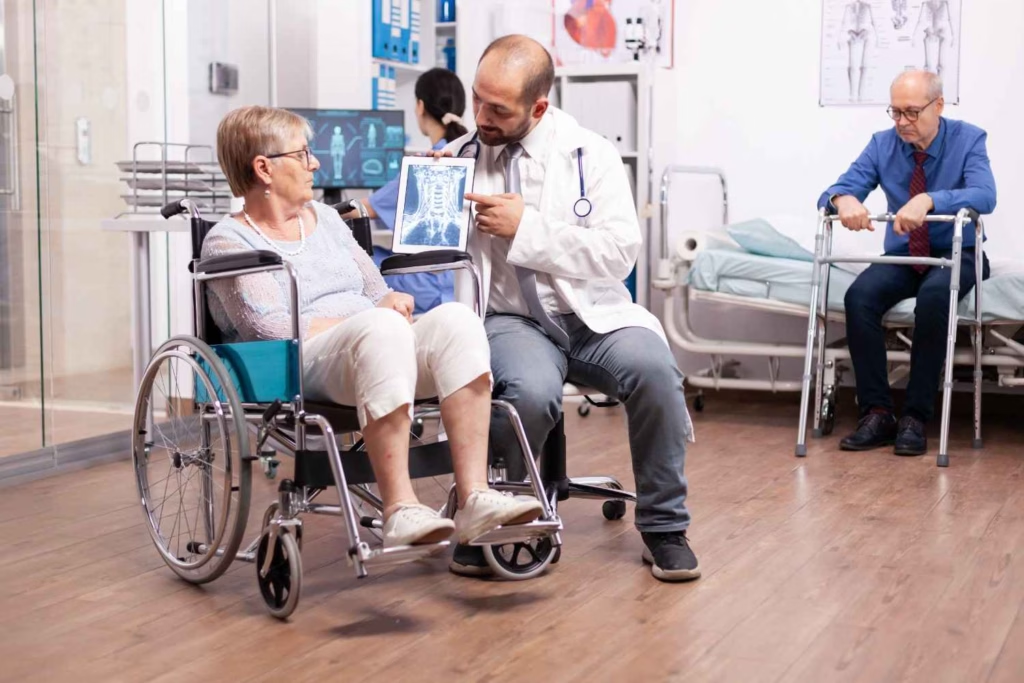
One of the most common and important questions families ask in elderly care is, what is the most common reason for hospital admission among older adults? It is an important question because hospital stays in later life are rarely simple. A short admission can quickly affect strength, memory, mobility, appetite, and confidence. While there are many common causes of hospital admissions for older adults, the leading reason is often infection that progresses to sepsis, especially from the urine, lungs, skin, or abdomen.
In fact, sepsis is one of the most common reasons elderly patients are admitted, particularly in frail adults with dementia, diabetes, weak immunity, or poor mobility. But what makes this issue so important is that older adults often do not show illness in the usual way. Instead of obvious fever or severe pain, they may simply seem weaker, more sleepy, confused, less steady on their feet, or suddenly unable to cope at home.
This is why understanding the most common reason for geriatric hospitalization is so valuable. It helps families spot danger earlier, seek help faster, and sometimes prevent a full hospital admission before the illness becomes severe.
Table of Contents
- What Is the Most Common Reason for Hospital Admission?
- Why Sepsis Is So Common in Older Adults
- Why Older Adults Do Not Show “Typical” Infection Signs
- Urine Infections and Sudden Confusion
- Pneumonia and Lung Infections
- Falls That Start With Medical Illness
- Heart Failure and Fluid Overload
- Dehydration and Rapid Decline
- Medication Side Effects That Lead to Admission
- Delirium as a Reason for Hospitalization
- The Top 10 Reasons for Hospitalization in Older Adults
- Why Frailty Changes Everything
- When Families Should Seek Help Early
- Can These Hospital Admissions Be Prevented?
- A Word from Dr. Zara
- Frequently Asked Questions
What Is the Most Common Reason for Hospital Admission?
When doctors look at the most common reasons old people go to hospital, infection remains one of the leading causes, and severe infection causing sepsis is often the biggest concern.
Sepsis happens when the body reacts dangerously to an infection and starts affecting multiple organs. In older adults, this process can happen quickly, sometimes over just a few hours.
The infection may begin from something that seems small at first, such as a urine infection, pneumonia, an infected wound, or even a pressure sore. But in a frail body, the infection may spread or trigger widespread inflammation, leading to sudden weakness, confusion, poor blood pressure, dehydration, and kidney strain.
This is why the most common reason for hospitalization among older adults is often infection plus frailty, rather than infection alone.
Why Sepsis Is So Common in Older Adults
Sepsis is especially common in elderly medicine because the aging body has less reserve.
As people get older, the immune system becomes slower and less efficient. The kidneys may already be weaker. The heart may not tolerate infection stress as well. Long-term illnesses like diabetes, stroke, dementia, or chronic lung disease reduce the body’s ability to bounce back.
This means an infection that a younger adult might manage at home with antibiotics can quickly become the most common reason for geriatric hospitalization in an older person.
Families are often shocked by how quickly a loved one can change.
Someone who was walking yesterday may suddenly be too weak to stand today.
That fast decline is one reason sepsis remains among the most common causes of hospital admissions for older adults.
Why Older Adults Do Not Show “Typical” Infection Signs
One reason older adults get admitted later than they should is because the symptoms often do not look dramatic.
Instead of a high fever, cough, or obvious pain, families may simply notice that the older person is:
- more sleepy
- eating less
- more confused
- suddenly incontinent
- refusing to walk
- shaky or weak
- less talkative
These subtle changes are extremely important.
Very often, these “small” symptoms are actually the first signs of sepsis.
This difference in presentation is a major reason sepsis becomes the most common reason elderly patients are admitted.
Urine Infections and Sudden Confusion
Urinary tract infections are one of the biggest triggers of elderly hospital admission.
A urine infection in an older adult often does not begin with burning pain.
Instead, it may first show as sudden confusion, hallucinations, weakness, falls, or not drinking enough.
A family may think the main problem is memory or “old age,” when in fact the bladder infection has already started affecting the whole body.
Once dehydration and confusion begin, the risk of kidney injury and sepsis rises quickly.
This is why urine infections are one of the top reasons for hospitalization in seniors.
Pneumonia and Lung Infections
Pneumonia is another major cause of hospital stays in older adults.
Older lungs are often weaker, and coughing strength may be reduced. This makes it harder to clear mucus and harder to fight infection early.
Families may notice the older person becoming breathless, sleepy, confused, or suddenly unable to walk to the bathroom without stopping.
Sometimes there is no obvious cough at all.
Instead, the person may simply seem “off.”
This is why pneumonia remains one of the most common causes of hospital admissions for older adults, especially during cold seasons.
Falls That Start With Medical Illness
Falls are often listed among the top 10 reasons for hospitalization, but many falls are actually caused by an underlying illness.
An infection may weaken the legs.
Dehydration may drop blood pressure.
A medication may cause dizziness.
Low oxygen from pneumonia may lead to collapse.
So while the visible reason for admission is the fall, the real medical reason may still be sepsis, dehydration, or heart strain.
This is why doctors always look beyond the fall itself.
Heart Failure and Fluid Overload
Heart failure is another common reason older adults are admitted, especially those with high blood pressure, kidney disease, or prior heart attacks.
The person may gradually become more breathless, need extra pillows at night, or suddenly wake up gasping for air.
Swollen legs, confusion, reduced appetite, and exhaustion may follow.
Because frail adults have less heart reserve, a small increase in fluid can become dangerous quickly.
This is another major answer to what is the most common reason for hospital admission.
Dehydration and Rapid Decline
Dehydration is a hidden but very common reason for hospital admission in the elderly.
Many older adults drink less because they do not feel thirsty, they are afraid of incontinence, or they are too tired to get up.
Once illness begins, fluid loss worsens quickly.
This can lead to confusion, falls, kidney injury, constipation, and low blood pressure.
Often dehydration is the silent factor that turns a mild illness into the most common reason for hospitalization among older adults.
Medication Side Effects That Lead to Admission
Another very common cause of hospital admission is medication-related illness.
Older bodies process medicine differently.
A normal dose of pain medicine, sleeping tablets, blood pressure tablets, or antibiotics may cause severe dizziness, confusion, constipation, urinary retention, or kidney problems.
Sometimes the medicine itself becomes the main reason the person is no longer safe at home.
This makes medication side effects one of the most common causes of hospital admissions for older adults.
Delirium as a Reason for Hospitalization
Sudden confusion alone is one of the most important reasons older adults come to hospital.
This is often delirium, which is a sudden change in attention, awareness, and thinking.
It may happen because of:
- sepsis
- urine infection
- pneumonia
- constipation
- dehydration
- medication changes
Families may describe it as “they suddenly became a different person.”
Delirium itself often becomes the reason for admission because the person may wander, refuse food, or no longer recognize danger.
The Top 10 Reasons for Hospitalization in Older Adults
When looking at the top 10 reasons for hospitalization, the leading causes usually include severe infection, pneumonia, urine infections, falls, heart failure, dehydration, delirium, stroke symptoms, medication side effects, and sudden weakness.
What is important is that these problems often overlap rather than happen alone.
That overlap is what makes elderly medicine complex.
Why Frailty Changes Everything
Frailty is what turns small illness into major crisis.
A younger person may recover from infection with rest and antibiotics.
A frail older adult may instead become bedbound, confused, dehydrated, and unable to swallow within a day or two.
This is why the most common reason for hospitalization among older adults is often frailty plus illness, not illness alone.
When Families Should Seek Help Early
The earliest warning signs should never be ignored.
If an older adult suddenly becomes weaker, more sleepy, less interested in food, more confused, or less able to walk, families should seek help quickly.
These subtle changes are often the first sign of sepsis or severe illness.
Early action can prevent major decline.
Can These Hospital Admissions Be Prevented?
Many hospital admissions can be reduced when small warning signs are caught early.
Good hydration, quick urine checks, wound care, fall prevention, pneumonia vaccines, and regular medication review all help.
In elderly care, prevention often starts with noticing the small changes before they become the most common reason elderly patients are admitted.
A Word from Dr. Zara
In elderly medicine, the most common reason for hospital admission is rarely just one illness. More often, it is the combination of infection, frailty, dehydration, confusion, and rapid loss of function that pushes the body beyond what can be safely managed at home. Sepsis remains one of the leading causes because older adults often show very subtle warning signs at first more sleep, less appetite, sudden weakness, or confusion instead of fever. Families who understand these early patterns are often the ones who help prevent severe decline by seeking care sooner. If you have any medical questions, feel free to email me at DRZARAMULLA@gmail.com.
Frequently Asked Questions
1. What is the most common reason elderly patients are admitted?
Sepsis and severe infection are among the most common.
2. Why are urine infections dangerous?
They can quickly cause delirium and sepsis.
3. Are falls sometimes caused by infection?
Yes, very often.
4. Can dehydration lead to hospital admission?
Absolutely.5. Can these admissions be prevented?
Many can, with early recognition.