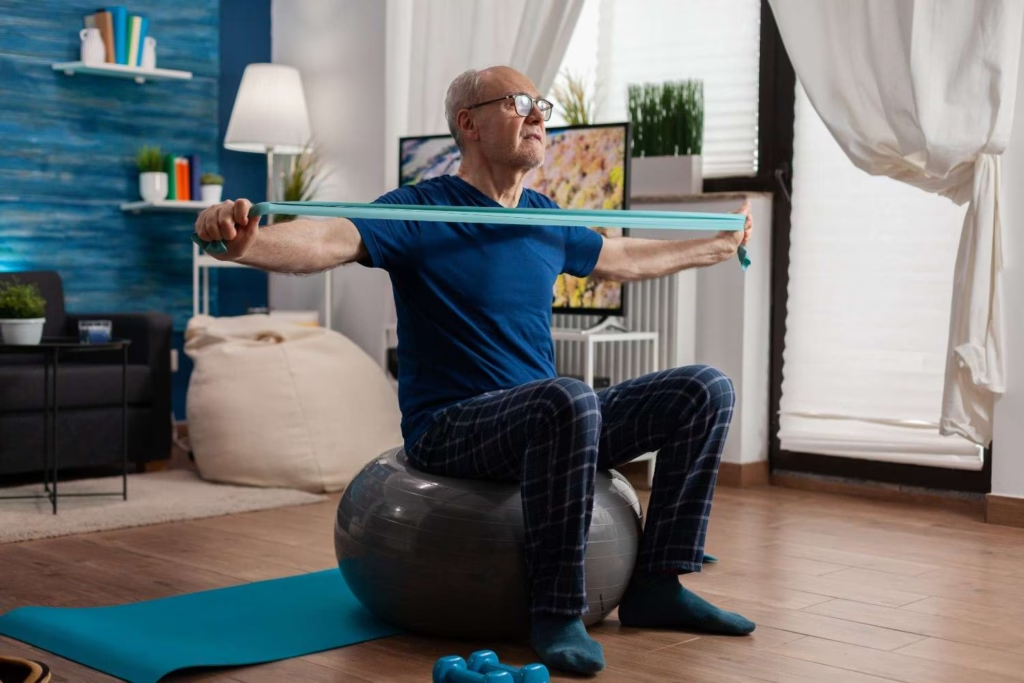
Getting older does not mean you have to stop moving. In fact, movement becomes even more important with age. Regular exercise helps older adults stay strong, flexible, balanced, and independent. It supports heart health, reduces joint stiffness, improves sleep, lifts mood, and lowers the risk of falls. However, not everyone feels comfortable doing standing exercises. Some people have weak legs, joint pain, dizziness, or are recovering from illness or surgery. For these individuals, seated exercise is a safe, simple, and effective way to stay active.
Table of Contents
What Are Seated Exercises
Why Seated Exercises Matter for Older Adults
Who Should Try Seated Exercises
Safety Tips Before Starting
Best Seated Warm Up Exercises
Best Seated Leg Exercises
Best Seated Arm and Shoulder Exercises
Best Seated Core and Posture Exercises
Best Seated Cardio Style Movements
A Simple 15 Minute Seated Exercise Routine
How Often Older Adults Should Do Seated Exercise
When to Stop and Get Medical Advice
A Word from Dr. Zara
Frequently Asked Questions
What Are Seated Exercises
Seated exercises are movements performed while sitting in a chair. They are designed to help older adults stay active without needing to stand for long periods. These exercises can target the entire body, including the legs, arms, shoulders, core, and back.
Some seated exercises focus on strength, while others improve flexibility, posture, or circulation. Even gentle movements like lifting the knees, rolling the shoulders, or tapping the toes can make a difference.
It is important to understand that seated exercise is not “less” exercise. It is simply a safer and more suitable option for many older adults. For some people, it is the best and most practical way to stay active.
Why Seated Exercises Matter for Older Adults
As people age, the body naturally becomes weaker and less flexible. Muscles can shrink if they are not used, joints can become stiff, and balance may decline. These changes can make everyday activities like standing up, walking, dressing, and bathing more difficult.
Seated exercises help slow down this decline and keep the body functioning better.
They can:
- Improve blood circulation
- Reduce stiffness in joints
- Activate weak muscles
- Support better posture
- Strengthen arms and legs
- Increase confidence in movement
- Reduce long periods of sitting still
Even small movements done regularly can help older adults feel more mobile and less restricted in their daily lives.
Who Should Try Seated Exercises
Seated exercises are ideal for many older adults, especially those who:
- Have weak legs
- Experience arthritis or joint pain
- Have balance problems
- Feel dizzy when standing
- Are recovering from illness or surgery
- Use a cane or walker
- Feel afraid of falling
- Get tired quickly
- Spend long periods sitting
Even stronger older adults can use seated exercises as a warm-up or on days when they want a lighter routine.
Safety Tips Before Starting
Safety should always come first.
- Use a strong, stable chair without wheels
- Sit upright, not slouched
- Keep your feet flat on the floor when needed
- Sit near the front of the chair but not too close to the edge
- Move slowly and with control
- Breathe normally and avoid holding your breath
- Wear comfortable clothing
- Make sure the floor is not slippery
Stop immediately if you feel chest pain, dizziness, or sharp pain.
If you have a serious medical condition such as heart disease, recent surgery, or severe weakness, speak with a healthcare professional before starting.
Best Seated Warm Up Exercises
A warm-up prepares the body for movement and reduces the risk of injury.
Seated Marching
Sit tall and lift one knee at a time as if marching.
Continue for 30 to 60 seconds.
Shoulder Rolls
Lift your shoulders up, roll them back, and relax.
Repeat 8 to 10 times.
Ankle Pumps
Lift your toes up, then point them down.
Repeat 10 to 15 times per foot.
Gentle Neck Turns
Turn your head slowly to the right, then to the left.
Repeat 5 times each side.
Best Seated Leg Exercises
Strong legs are important for standing, walking, and staying independent.
Seated Knee Lifts
Lift one knee toward your chest, then lower it.
Do 8 to 12 repetitions per leg.
Seated Leg Extensions
Straighten one leg in front of you, hold briefly, then lower it.
Do 8 to 10 repetitions per leg.
Heel Raises While Sitting
Keep your toes on the floor and lift your heels up.
Do 10 to 15 repetitions.
Toe Raises While Sitting
Keep your heels on the floor and lift your toes up.
Do 10 to 15 repetitions.
Best Seated Arm and Shoulder Exercises
These exercises help with daily tasks like lifting, reaching, and pushing.
Seated Arm Raises
Lift your arms forward or to the side, then lower them.
Do 8 to 10 repetitions.
Seated Bicep Curls
Bend your elbows and bring your hands toward your shoulders.
Do 10 to 12 repetitions. Use light weights if comfortable.
Seated Overhead Reach
Reach both arms up, then bring them down.
Do 8 repetitions.
Seated Push (Air or Wall)
Push your hands forward as if pushing something away.
Do 10 repetitions.
Best Seated Core and Posture Exercises
Core strength helps with stability and posture.
Seated Tummy Tighten
Pull your stomach in gently and hold for 5 seconds.
Repeat 5 to 8 times.
Seated Side Bend
Lift one arm and lean gently to the side.
Do 5 repetitions per side.
Seated Trunk Twist
Turn your upper body slowly to one side, then the other.
Do 5 to 8 repetitions per side.
Seated Posture Reset
Sit tall, pull shoulders back, and lift your chest.
Hold for 10 seconds and repeat 5 times.
Best Seated Cardio Style Movements
Cardio helps improve heart health and energy levels.
Fast Seated Marching
March in place a little faster than usual.
Do 30 to 60 seconds.
Seated Arm Swings
Swing your arms forward and back.
Do 30 seconds.
Seated Step Taps
Tap your feet out and in rhythmically.
Do 30 to 60 seconds.
Seated Punches
Gently punch forward one arm at a time.
Do 30 seconds.
A Simple 15 Minute Seated Exercise Routine
Warm Up (3 minutes)
- Seated marching (1 minute)
- Shoulder rolls (30 seconds)
- Ankle pumps (1 minute)
- Neck turns (30 seconds)
Strength (7 minutes)
- Knee lifts (10 per leg)
- Leg extensions (10 per leg)
- Heel raises (15 reps)
- Toe raises (15 reps)
- Arm raises (10 reps)
- Bicep curls (10 reps)
- Overhead reach (8 reps)
Core and Posture (3 minutes)
- Tummy tighten (5 reps)
- Trunk twists (5 per side)
- Posture hold (5 times)
Cardio (2 minutes)
- Fast seated marching (1 minute)
- Seated punches (30 seconds)
- Step taps (30 seconds)
How Often Older Adults Should Do Seated Exercise
A good goal is to exercise 3 to 5 days per week.
Some people can safely do light seated exercises every day, especially if they spend long hours sitting.
Even short sessions of 10 to 15 minutes can provide real benefits when done consistently.
When to Stop and Get Medical Advice
Stop exercising and seek help if you feel:
- Chest pain
- Strong dizziness
- Severe shortness of breath
- Sharp or sudden pain
- Sudden weakness
- Confusion
- An unusual racing heartbeat
If you have a serious health condition, it is always best to consult a doctor before starting.
Why Seated Exercise Works
Seated exercise works because it keeps the body moving without placing too much stress on it. It allows older adults to build strength, improve circulation, and maintain mobility safely.
It also helps reduce fear. Many older adults worry about falling, which can lead to less movement. Seated exercise provides a safe starting point, helping build confidence over time.
Even though the movements are simple, they train important daily functions like sitting upright, lifting the legs, reaching, and staying steady.
A Word from Dr. Zara
Seated exercises are one of the safest and most effective ways for older adults to stay active, especially when standing feels difficult. They help improve strength, circulation, posture, and confidence. Exercise does not need to be intense to be helpful. Simple movements done regularly can protect independence and improve quality of life. A chair can be the perfect place to begin.
Frequently Asked Questions
1. Are seated exercises really helpful?
Yes. They improve strength, flexibility, and circulation.
2. Can they help weak legs?
Yes. Exercises like knee lifts and leg extensions help keep the legs active.
3. How long should a session be?
Even 10 to 15 minutes is helpful.
4. Can seated exercises be done every day?
Yes, if they are done safely and comfortably.
5. What kind of chair should be used?
Use a strong, stable chair without wheels.