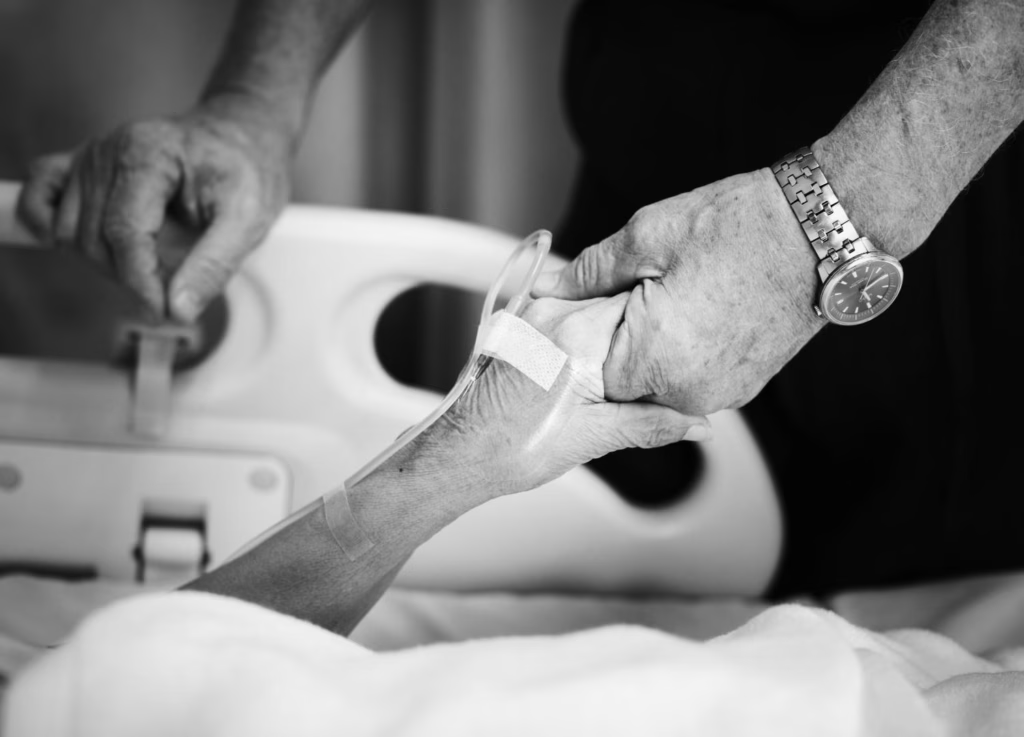
When a person becomes very ill, families often ask an important and emotional question: how do doctors know when someone is dying? This can be a hard topic to talk about, but understanding it can help families feel more prepared and less afraid. Doctors do not guess randomly. They look for clear signs in the body that show it is getting weaker and starting to shut down. These signs often happen slowly over time, and they can help doctors and families know when to focus more on comfort and care. This guide explains, in simple words, how doctors recognize when someone is nearing the end of life and what families can expect.
Table of Contents
- Why This Question Matters
- How the Body Changes Near the End of Life
- The Role of Doctors and Nurses
- General Signs of Decline
- Changes in Energy and Strength
- Changes in Eating and Drinking
- Changes in Breathing
- Changes in the Heart and Circulation
- Changes in the Brain and Awareness
- Signs in the Final Days
- Why These Changes Happen
- How Doctors Make Decisions
- How Families Can Understand the Signs
- A Word from Dr. Zara
- Frequently Asked Questions
Why This Question Matters
Many families want to know when their loved one is nearing the end of life. This is not because they want bad news, but because they want to prepare. They may want to spend time together, say important words, or make sure the person is comfortable.
Not knowing what is happening can cause fear and confusion. When people understand the signs, they feel more calm and ready. They can focus on being present and giving support.
Doctors help guide families during this time by explaining what they see and what it means.
How the Body Changes Near the End of Life
The human body is very strong, but over time, illness and age can weaken it. When a person is nearing the end of life, the body slowly begins to shut down.
This does not happen all at once. It happens in steps. Some parts of the body slow down first, and others follow.
The body uses less energy. Organs such as the heart, lungs, and kidneys do not work as well as before.
These changes are natural. They are part of the body’s final stage.
The Role of Doctors and Nurses
Doctors and nurses are trained to notice small changes in the body. They use their knowledge and experience to understand what these changes mean.
They look at:
- Physical signs
- Breathing patterns
- Heart activity
- Awareness and behavior
They also listen to what the patient and family say.
Doctors do not rely on just one sign. They look at the full picture over time.
Their goal is not only to recognize dying, but also to make sure the person is comfortable and cared for.
General Signs of Decline
Before the final days, there are often general signs that a person is getting weaker.
These signs may include:
- Less energy
- More time resting or sleeping
- Less interest in activities
- Needing more help with daily tasks
These changes can happen over weeks or months.
They show that the body is slowly losing strength.
Changes in Energy and Strength
One of the first signs doctors notice is a drop in energy.
The person may feel tired most of the time. Even simple tasks like sitting up or talking may feel difficult.
They may spend more time in bed or sitting quietly.
Walking may become harder, and they may need help moving.
This happens because the body is using less energy and cannot keep up with normal activity.
Changes in Eating and Drinking
Another important sign is a change in appetite.
The person may eat less and drink less. They may say they are not hungry or not thirsty.
This can be worrying for families, but it is a normal part of the process.
As the body slows down, it needs less food and water. Forcing food may make the person uncomfortable.
Doctors often explain that comfort is more important than eating at this stage.
Changes in Breathing
Breathing patterns often change as a person nears the end of life.
Doctors may notice:
- Slower breathing
- Irregular breathing
- Pauses between breaths
Sometimes breathing may sound noisy or uneven.
These changes happen because the body is no longer able to control breathing in the same way.
Even though it may look uncomfortable, doctors work to make sure the person is not in distress.
Changes in the Heart and Circulation
The heart and blood flow also change.
The person’s hands and feet may feel cool. The skin may look pale or slightly blue.
Blood pressure may drop, and the pulse may become weak.
These changes happen because the heart is not pumping as strongly as before.
The body sends blood to the most important organs, like the brain and heart, and less to the outer parts.
Changes in the Brain and Awareness
Doctors also look at changes in awareness.
The person may become less alert. They may sleep more and talk less.
Sometimes they may seem confused or not recognize people.
At times, they may say things that do not make sense.
These changes happen because the brain is not getting as much oxygen or energy.
Even if the person is not responding, they may still hear voices. Speaking gently can still be comforting.
Signs in the Final Days
In the final days or hours, changes become more noticeable.
The person may:
- Sleep almost all the time
- Stop eating and drinking completely
- Have very slow or irregular breathing
- Be unresponsive
There may also be long pauses between breaths.
The body is now in its final stage.
Doctors recognize these signs and focus fully on comfort care.
Why These Changes Happen
These changes happen because the body is shutting down.
Each system in the body depends on energy and oxygen. When these are reduced, the systems begin to slow down.
The body is no longer trying to grow or heal. It is moving toward rest.
This is a natural process, even though it can be hard to watch.
Understanding this can help families feel less confused.
How Doctors Make Decisions
Doctors use all the signs together to understand what is happening.
They do not rely on one single change.
They may also use medical tests, but often the physical signs are enough.
Doctors also talk with the family and explain what they are seeing.
Their goal is to guide decisions about care, especially when comfort becomes the main focus.
How Families Can Understand the Signs
Families play an important role during this time.
They can watch for changes and ask questions.
It is okay to feel unsure or worried.
Doctors and nurses are there to explain and support.
Families can focus on:
- Spending time together
- Speaking gently
- Providing comfort
Even small actions can bring peace.
Why This Understanding Helps
Understanding the signs of dying can help families feel more prepared.
It reduces fear and confusion.
It allows families to focus on care and connection instead of uncertainty.
It also helps them make important decisions with more confidence.
A Word from Dr. Zara
Recognizing the signs that someone is nearing the end of life is not about giving up. It is about understanding what the body is going through. This knowledge helps families focus on comfort, dignity, and meaningful time together.
Frequently Asked Questions
1. Can doctors predict the exact time of death?
No, they can estimate, but not give an exact time.
2. Is less eating a bad sign?
It is normal near the end of life.
3. Can a person still hear if unresponsive?
Yes, hearing may still be present.
4. Are breathing changes painful?
Not always. Doctors manage comfort carefully.
5. What should families do?
Stay calm, offer comfort, and spend time together.