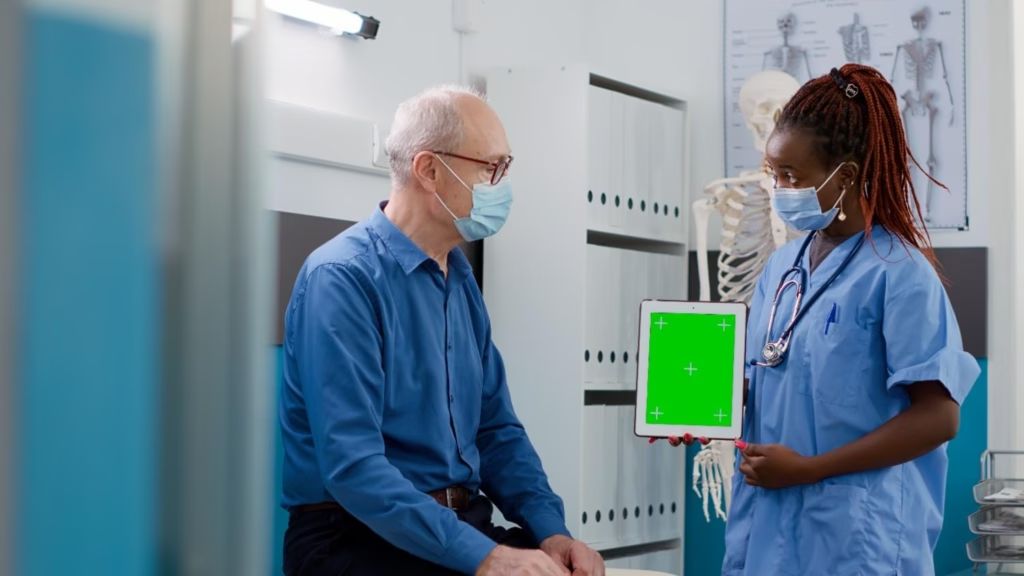
For many older adults and their families, the hospital can feel confusing, stressful, and overwhelming. One moment everything seems stable at home, and the next there are ambulances, emergency rooms, tests, specialists, machines, and difficult decisions. Families often focus on the illness itself, but they may not fully understand how the hospital and medical system actually works around an older person’s care. This matters because older adults do not simply go to hospital and come back the same.
The hospital system can strongly shape recovery, independence, comfort, and even long-term survival. Understanding how hospitals make decisions, why delays happen, why so many teams become involved, and why discharge planning is so important helps families make better choices and feel less lost. Good care is not only about the treatment given. It is also about understanding the system that delivers it, especially in older adults whose needs are often more complex than younger patients.
Table of Contents
- Why Hospital Care Feels So Complex
- What Happens in the Emergency Room
- Why Older Adults Need More Assessments
- The Many Doctors Involved
- Why Tests Often Take Time
- The Risk of Delays and Waiting
- How Hospital Routines Affect Older Adults
- Why Discharge Planning Starts Early
- The Hidden Risk of Bed Rest
- Why Medication Errors Can Happen
- How Families Can Help the Medical Team
- Why Communication Breakdowns Happen
- The Difference Between Cure and Stabilization
- When the System Focuses on Safety Over Speed
- What Families Should Ask Before Discharge
- A Word from Dr. Zara
- Frequently Asked Questions
Why Hospital Care Feels So Complex
Hospitals can feel complicated because many things happen at once. For older adults, doctors are rarely treating only one issue. A simple fall may involve pain, weakness, dehydration, infection, poor balance, memory problems, and medication side effects all at the same time.
This means the hospital system has to look at the whole person, not just the one main problem. That is why families may feel frustrated when the answer is not immediate.
A hospital is not just a place for treatment. It is also a place for sorting out what caused the problem, what new risks exist, and what needs to happen to make home safe again.
For older adults, this broader thinking is extremely important.
What Happens in the Emergency Room
The emergency room is often the first point of contact, and it can feel fast and chaotic.
The first job of the emergency team is to make sure the person is stable. They quickly check breathing, heart rate, blood pressure, temperature, oxygen, and immediate danger signs.
After that, the deeper medical work begins.
In older adults, symptoms may not look typical. An infection may present as confusion instead of fever. A heart problem may show as weakness instead of chest pain. Dehydration may show as a fall.
Because symptoms are less obvious, emergency doctors often need more time to understand what is truly happening.
This is why families sometimes feel the process is slower than expected.
Why Older Adults Need More Assessments
Older adults usually need more layers of assessment than younger adults.
The hospital team often checks:
- Mobility
- Memory
- Swallowing
- Nutrition
- Skin integrity
- Continence
- Medication safety
- Fall risk
These areas may seem unrelated to the main illness, but they strongly affect recovery.
For example, a pneumonia admission is not only about antibiotics. The team must also ask whether the person can swallow safely, walk safely to the bathroom, and manage medicines at home.
This broader assessment protects the older adult from complications after discharge.
The Many Doctors Involved
Families are often surprised by how many doctors and professionals become involved.
An older adult may be seen by:
- Emergency physicians
- Medical doctors
- Surgeons
- Geriatricians
- Physiotherapists
- Occupational therapists
- Speech therapists
- Dietitians
- Palliative care teams
This can feel overwhelming, but each person looks at a different part of the bigger picture.
The reason there are many teams is because older adults often need whole-person care, not disease-only care.
Why Tests Often Take Time
Families sometimes worry when scans or blood tests do not happen immediately.
The truth is that hospitals prioritize by urgency. Life-threatening problems are handled first.
In older adults, the team may also need multiple tests because one symptom can have several causes.
Confusion, for example, may come from infection, stroke, dehydration, constipation, medicine side effects, or poor oxygen levels.
This means careful testing is often necessary before treatment decisions are made.
The delay can feel stressful, but the goal is accuracy and safety.
The Risk of Delays and Waiting
Waiting is one of the hardest parts of hospital care.
There may be waiting for:
- Test results
- Specialist reviews
- A bed on the ward
- Transport
- Therapy assessments
- Family meetings
- Discharge equipment
For older adults, delays matter because long waiting times can increase confusion, weakness, and distress.
This is why families should keep the older adult calm, oriented, hydrated, and reassured while waiting.
The medical system is often balancing many urgent patients at once.
How Hospital Routines Affect Older Adults
Hospitals run on routines that are not always ideal for older adults.
There are overnight observations, early blood tests, meal schedules, medication rounds, and frequent interruptions.
For a frail older person, poor sleep alone can worsen confusion, weakness, and mood.
The unfamiliar environment may also increase:
- Delirium
- Fear
- Loss of appetite
- Refusal to move
- Disrupted bladder habits
This is why hospital stays can sometimes lead to decline even when the original illness improves.
Why Discharge Planning Starts Early
Many families think discharge planning starts when the patient is already better.
In reality, good hospitals begin discharge planning from the first day.
The team asks:
- Can they walk safely?
- Can they climb steps?
- Will they need oxygen?
- Can they swallow safely?
- Do they need home nursing?
- Is family support available?
This early planning helps prevent unsafe discharges and repeated admissions.
For older adults, going home safely is just as important as treating the illness itself.
The Hidden Risk of Bed Rest
One of the biggest hospital dangers for older adults is bed rest.
Even a few days in bed can cause major muscle loss.
An older adult may enter hospital walking independently and leave needing help if they stay in bed too long.
This is why early movement matters so much.
Walking to the chair, standing for meals, and short corridor walks can protect strength.
Families should understand that mobility is often part of the treatment plan.
Why Medication Errors Can Happen
Older adults often take many medicines before hospital admission.
Once admitted, new drugs are added, some old ones are paused, and doses may change depending on kidney function or blood pressure.
This makes medication review very important.
Sometimes confusion happens during transitions:
- Home to hospital
- Ward to ward
- Hospital to home
Families can help by keeping an updated medicine list and asking for clear discharge instructions.
How Families Can Help the Medical Team
Families are one of the most valuable parts of hospital care.
They help by explaining:
- The person’s normal memory level
- Walking ability before illness
- Eating habits
- Medication history
- What “normal” behavior looks like
- Personal wishes and values
This information helps doctors tell the difference between chronic problems and new illnesses.
Family presence also reduces fear and confusion.
Why Communication Breakdowns Happen
Hospital communication can sometimes feel fragmented because different teams work in shifts.
The day doctor, night doctor, therapist, and nurse may all interact with the same patient.
This creates opportunities for missed details unless the handover is strong.
Families can help by politely repeating important concerns and asking for updates.
Clear communication protects older adults from unnecessary errors.
The Difference Between Cure and Stabilization
One important hospital insight is that not every admission ends in a full cure.
Sometimes the realistic goal is stabilization.
This means:
- Treating the crisis
- Reducing symptoms
- Returning close to baseline
- Preventing further decline
- Making home safer
For older adults with frailty, this may be a more realistic and kinder goal than complete recovery.
When the System Focuses on Safety Over Speed
Families often want fast discharge, but hospitals must prioritize safe discharge.
A rushed discharge in an older adult can lead to:
- Falls at home
- Missed medications
- Unsafe transfers
- Poor nutrition
- Re-admission within days
This is why systems may appear slow.
Safety is often more important than speed.
What Families Should Ask Before Discharge
Before discharge, families should clearly understand:
- The diagnosis
- New medications
- Red flag symptoms
- Follow-up appointments
- Walking limitations
- Equipment needs
- Who to call if things worsen
These questions prevent confusion after returning home.
A Word from Dr. Zara
Older adults often need far more than treatment alone, they need mobility support, medication review, nutrition planning, safe discharge, and protection from complications like delirium and muscle loss. Families who understand how the hospital works are better able to ask the right questions, notice important changes, and support safer recovery at home. The medical system may sometimes feel slow or complex, but much of that complexity exists because older adults need careful, whole-person care rather than quick one-size-fits-all decisions. If you have any medical questions, feel free to email me at DRZARAMULLA@gmail.com.
Frequently Asked Questions
1. Why do hospitals seem slow for older adults?
Because they often need multiple assessments and safe discharge planning.
2. Why are so many doctors involved?
Each professional manages a different recovery need.
3. Is bed rest dangerous?
Yes, it can quickly weaken older adults.
4. Why does discharge take time?
Because home safety matters.5. How can families help?
By sharing baseline functions and asking clear questions.
